April 9, 2026 – February 14, 2027
Come Back Fighting: USS New Orleans at War
Similar in spirit to the city it was named after, the USS New Orleans (CA-32) displayed endless resilience during its World War II career. The heavy cruiser showed force throughout the attack on Pearl Harbor, provided defense in nearly every major Pacific war campaign, and survived its bow being blown off in the battle of Tassafaronga (which led to ingenious camouflaging and backwards cruising techniques to return to safety). It inspired the popular patriotic song, "Praise the Lord and Pass the Ammunition!", and was home to many US Navy crewmen's first rite of passage initiation as they crossed the equator. In July 2025, the USS New Orleans' blown-off bow was finally located underwater off the coast of the Solomon Islands!
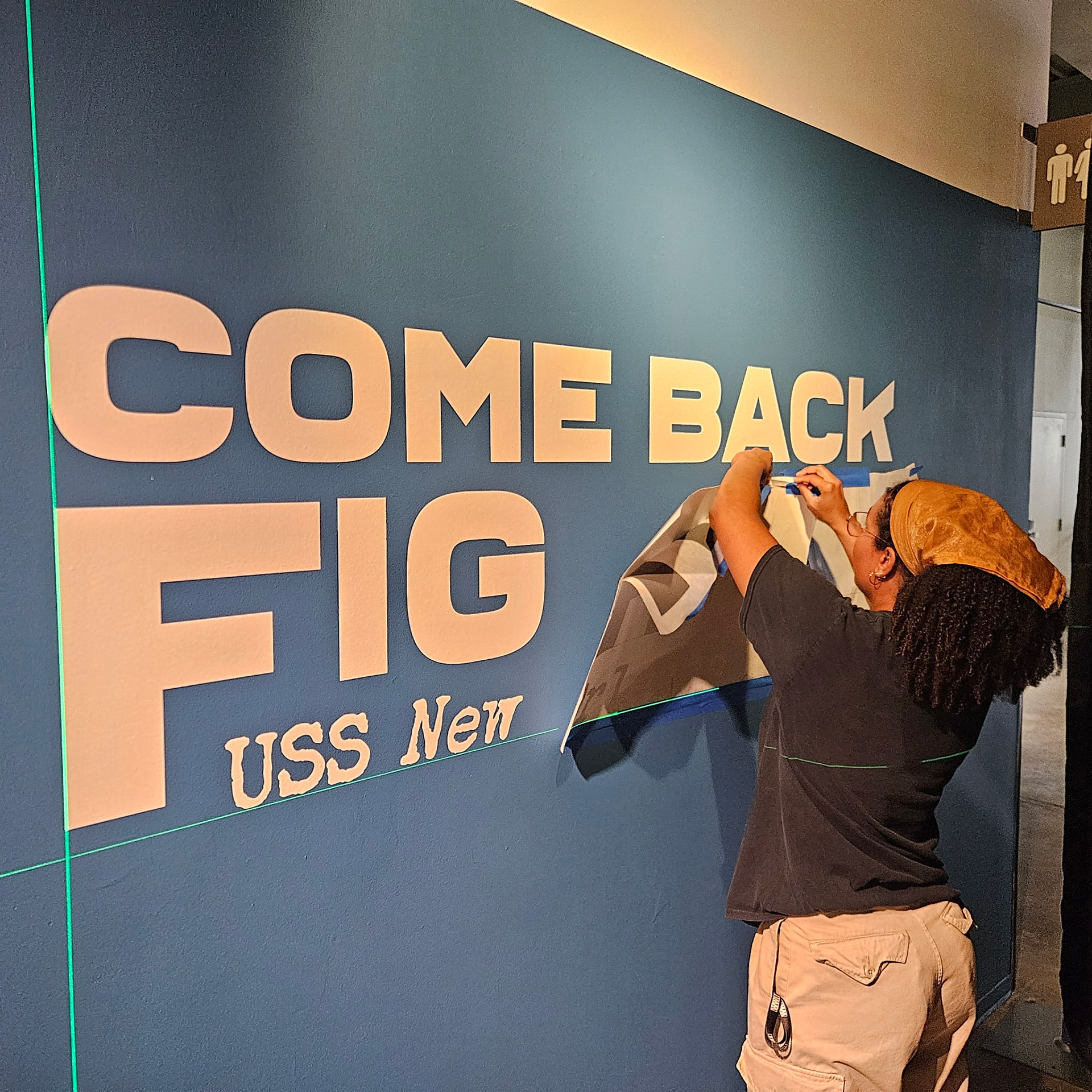
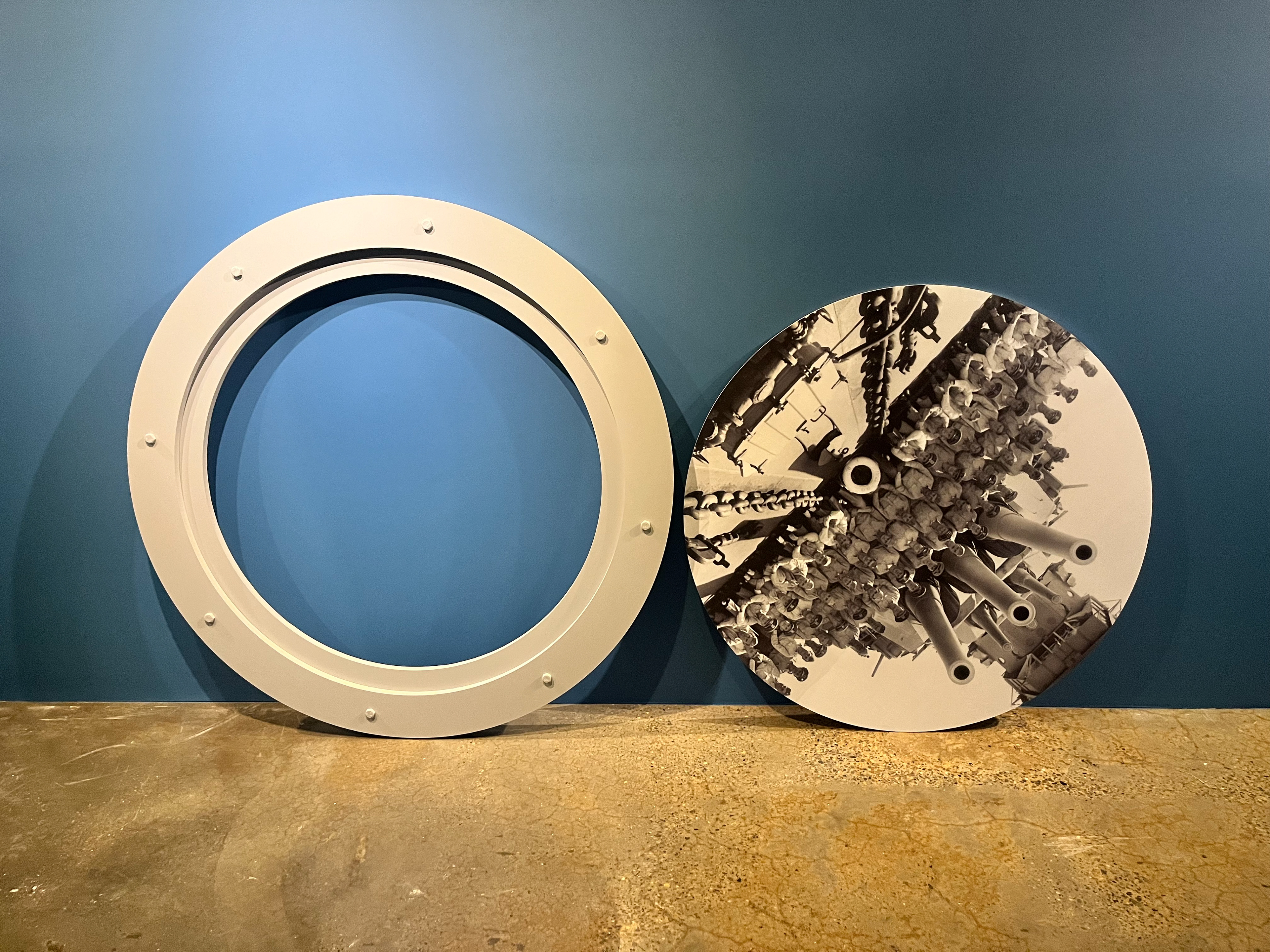
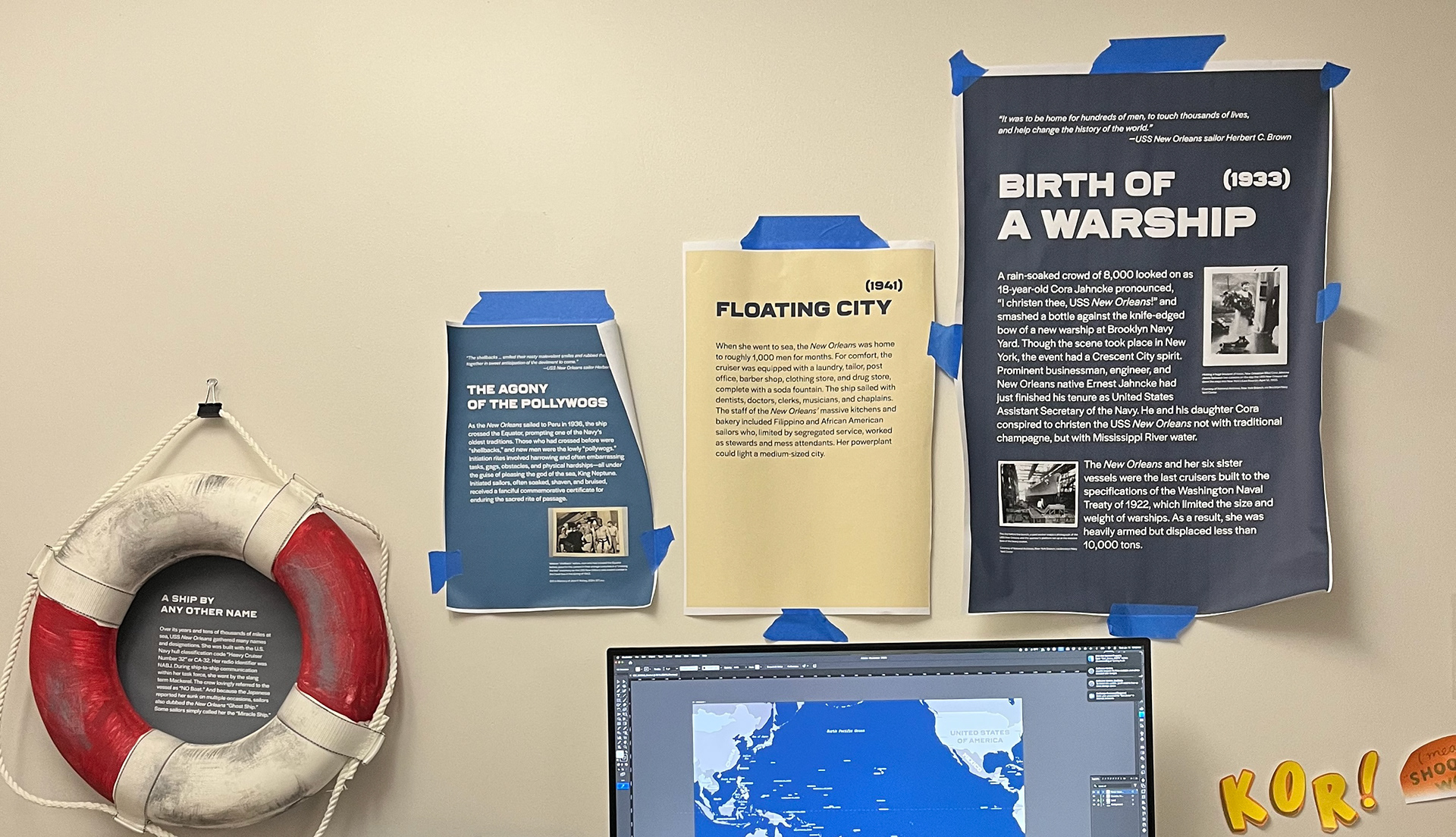
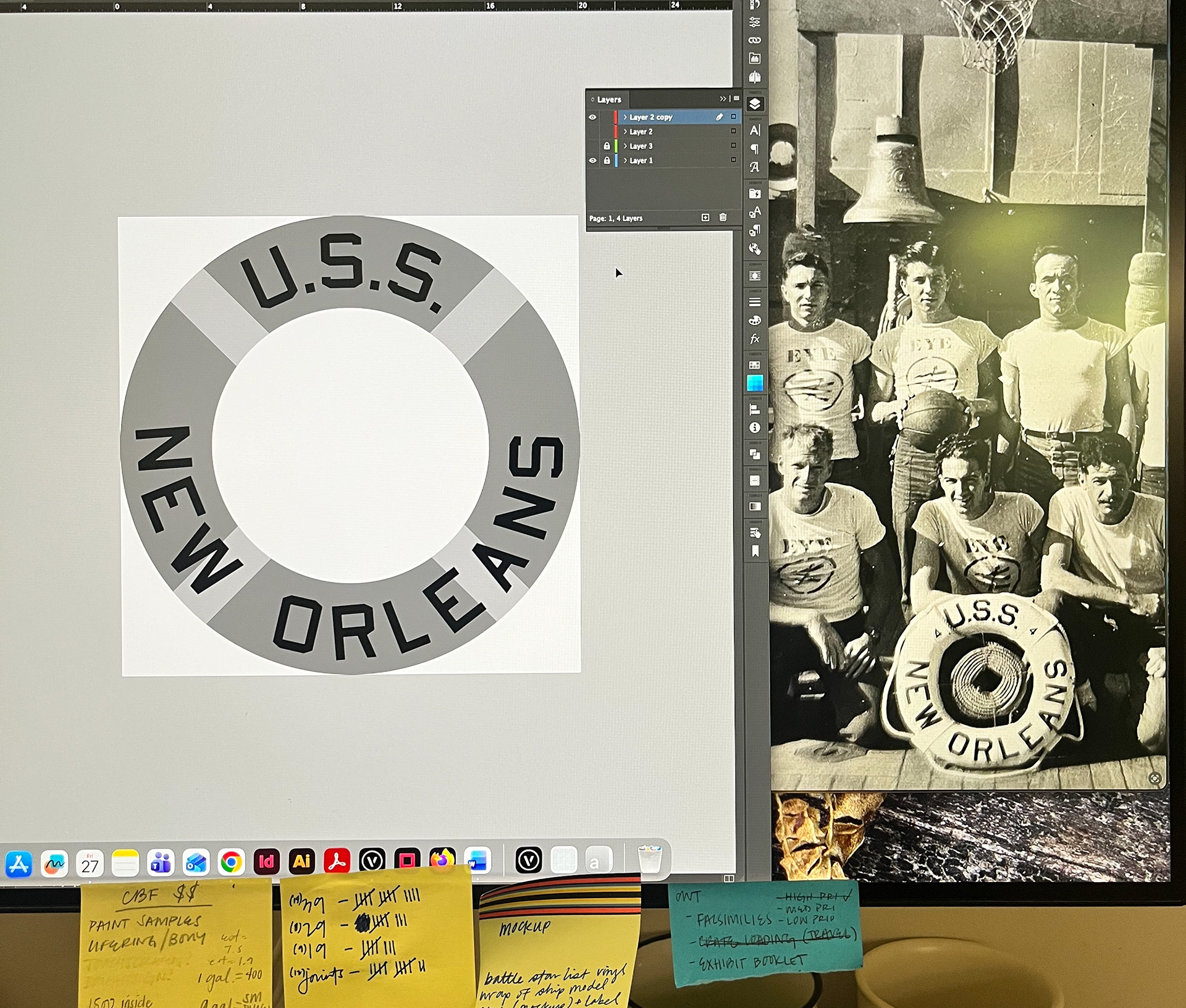
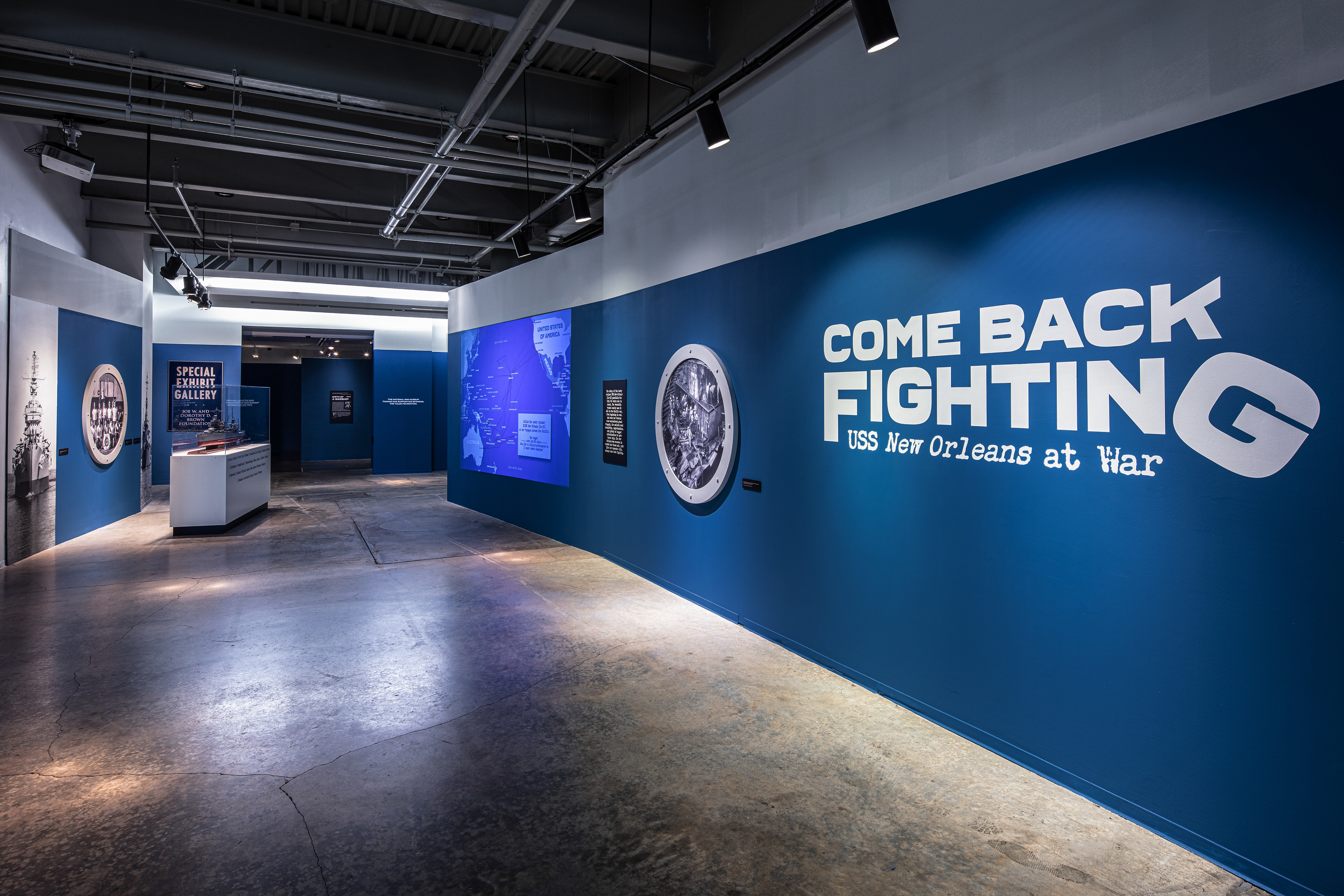
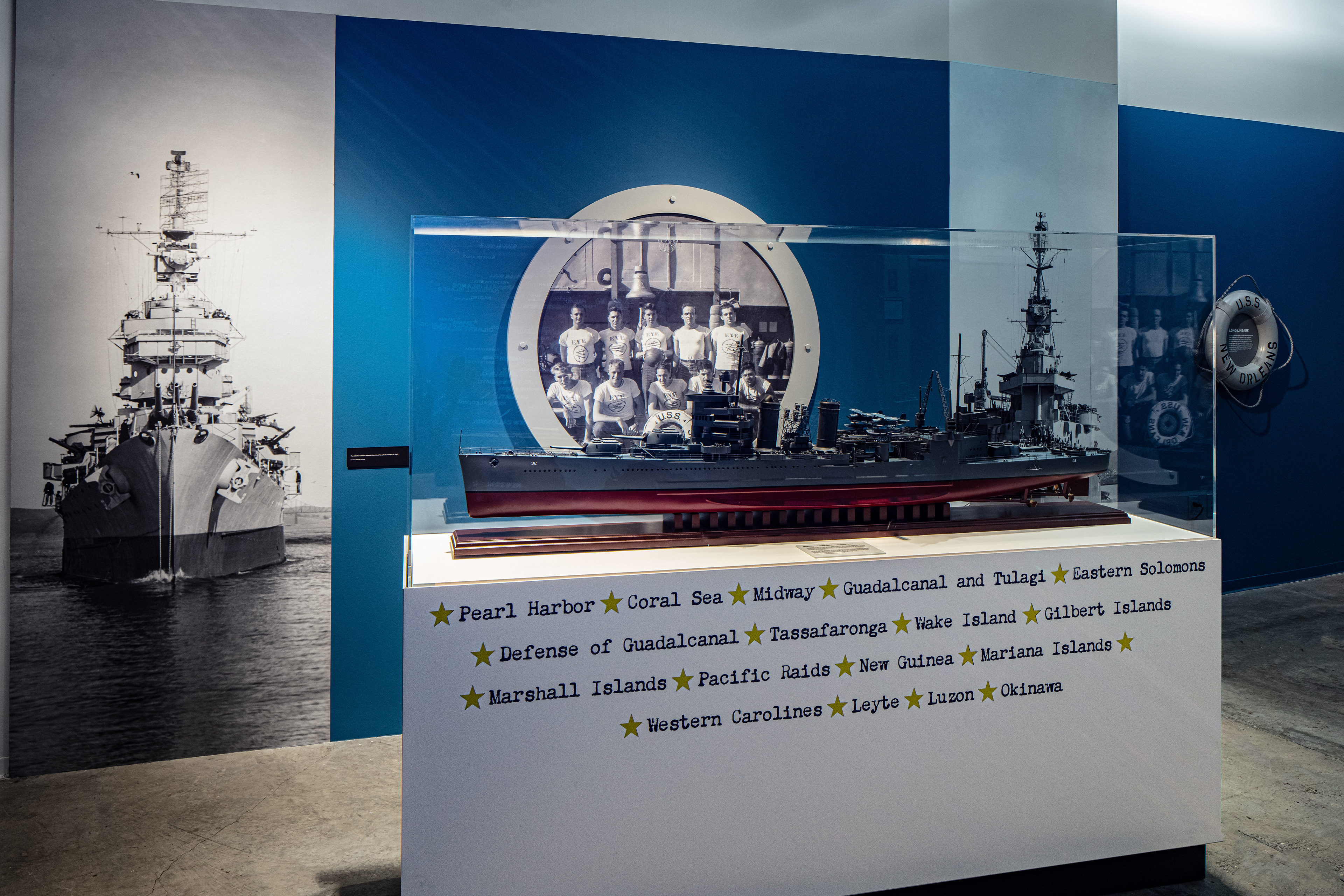
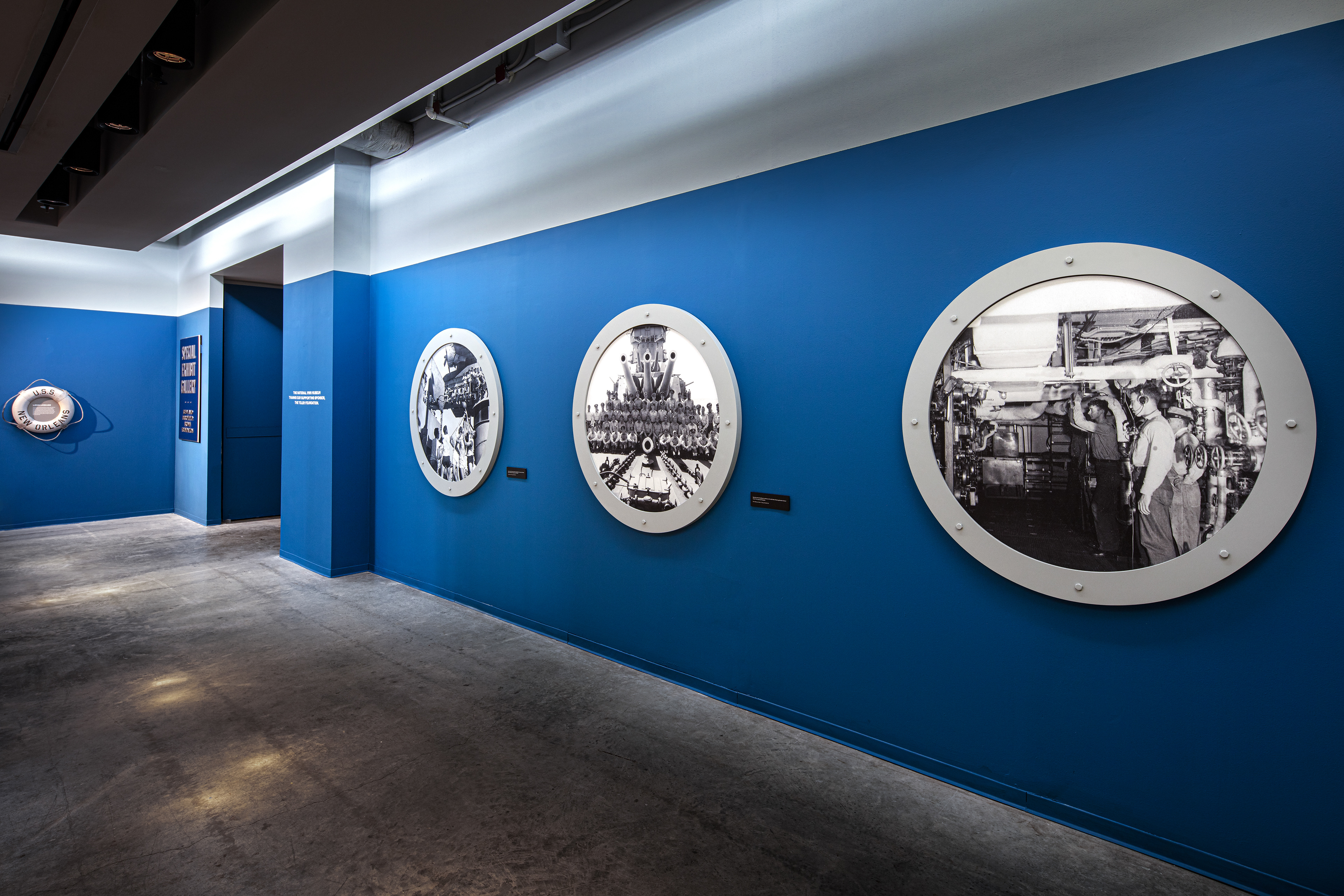
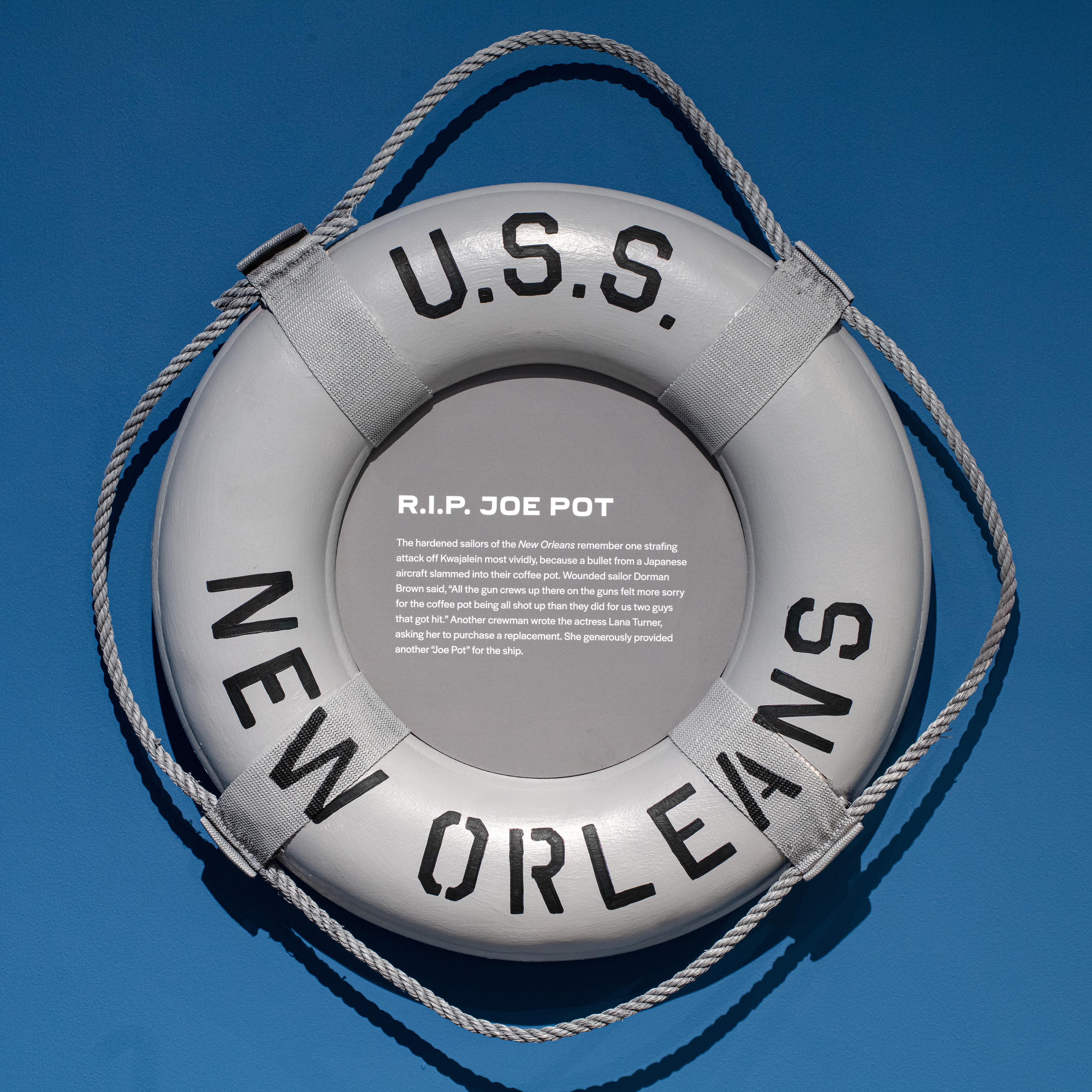
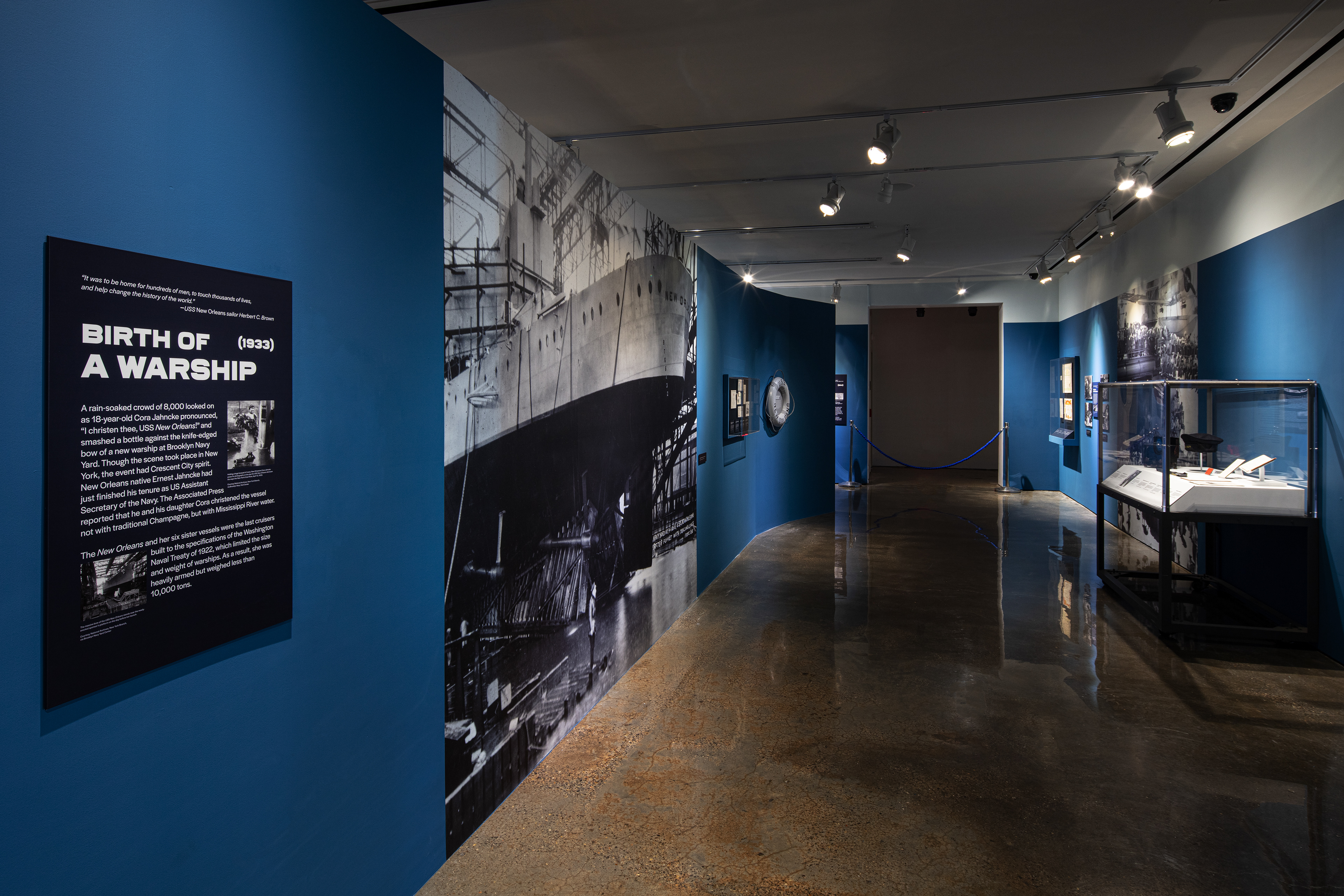
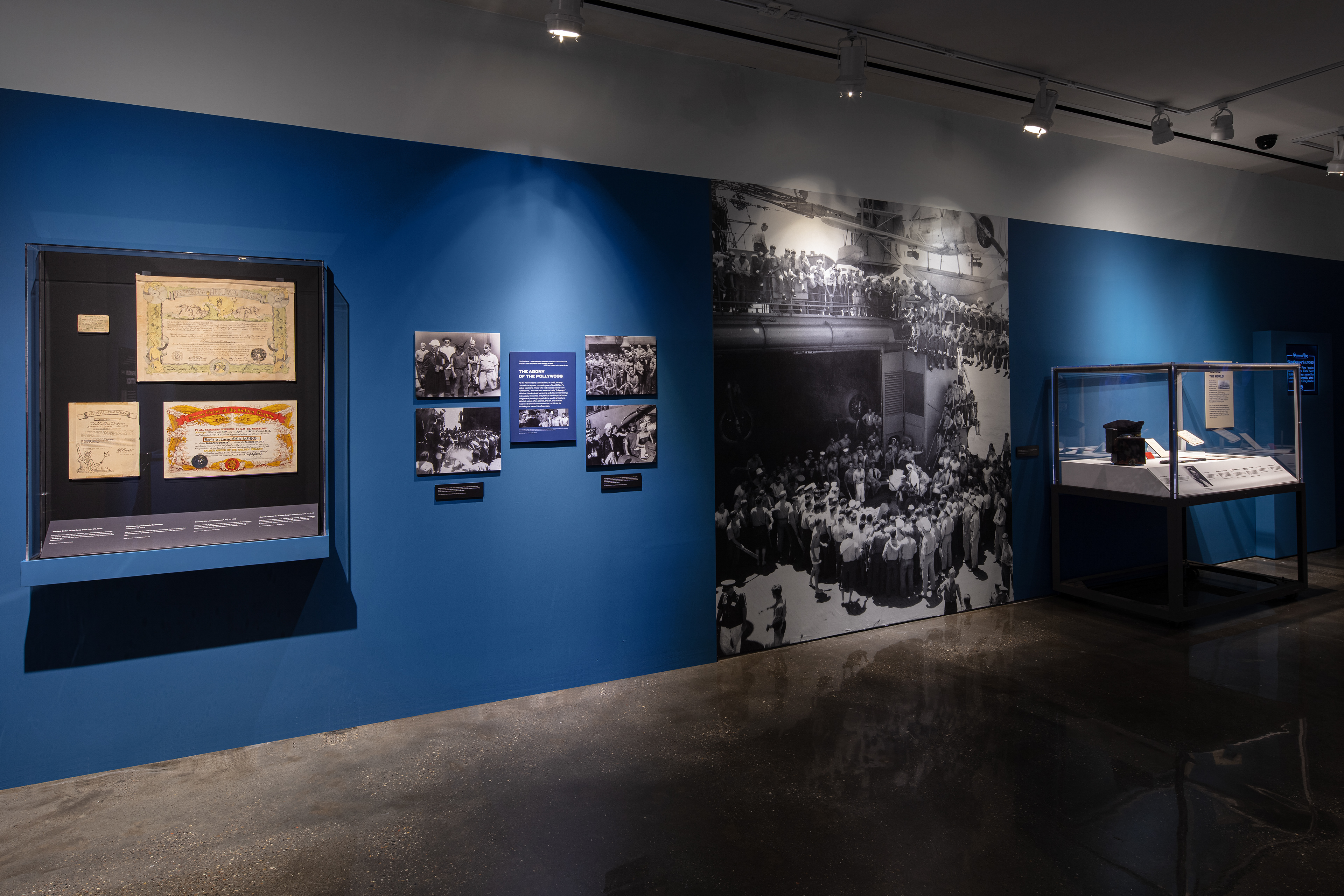
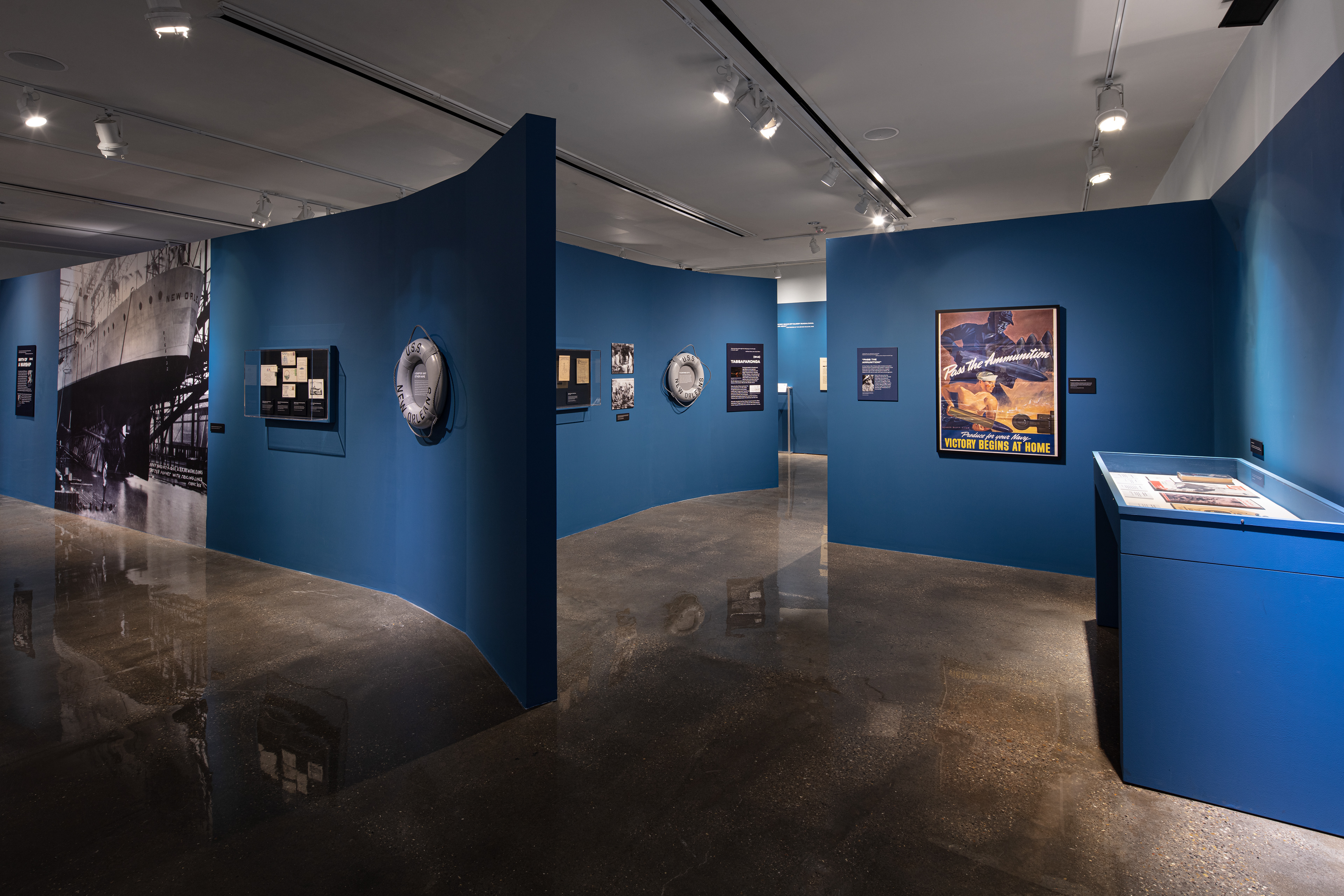
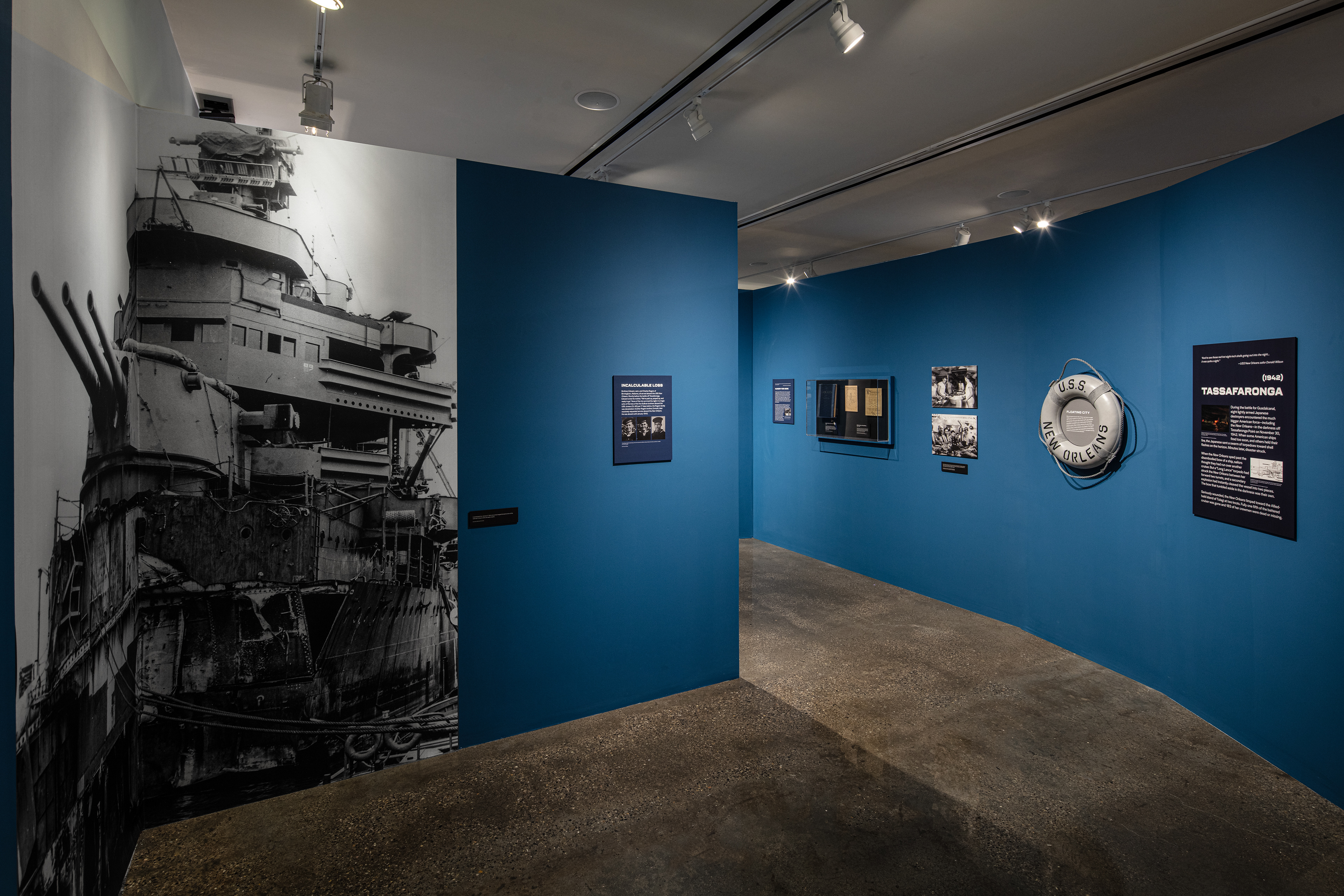
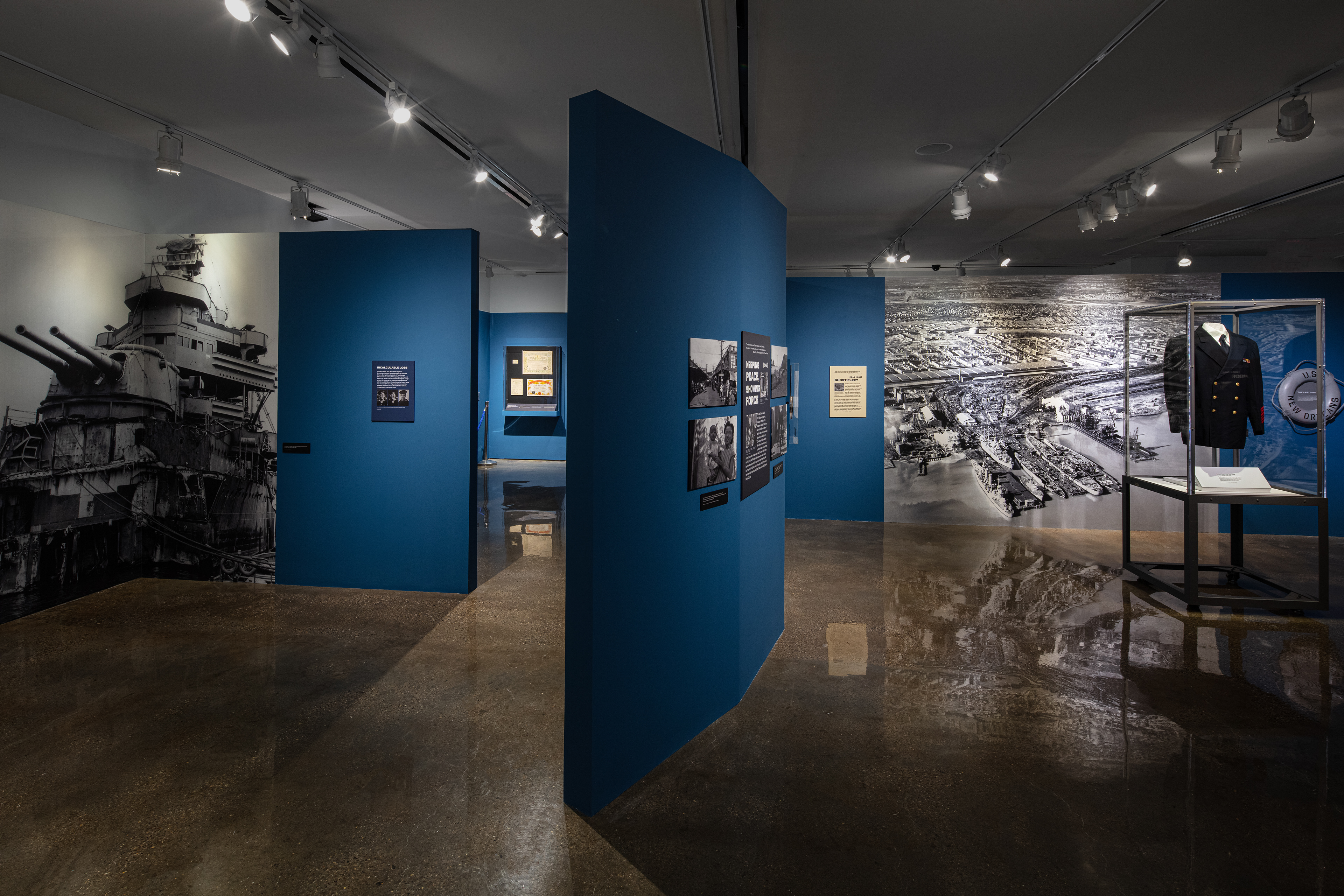
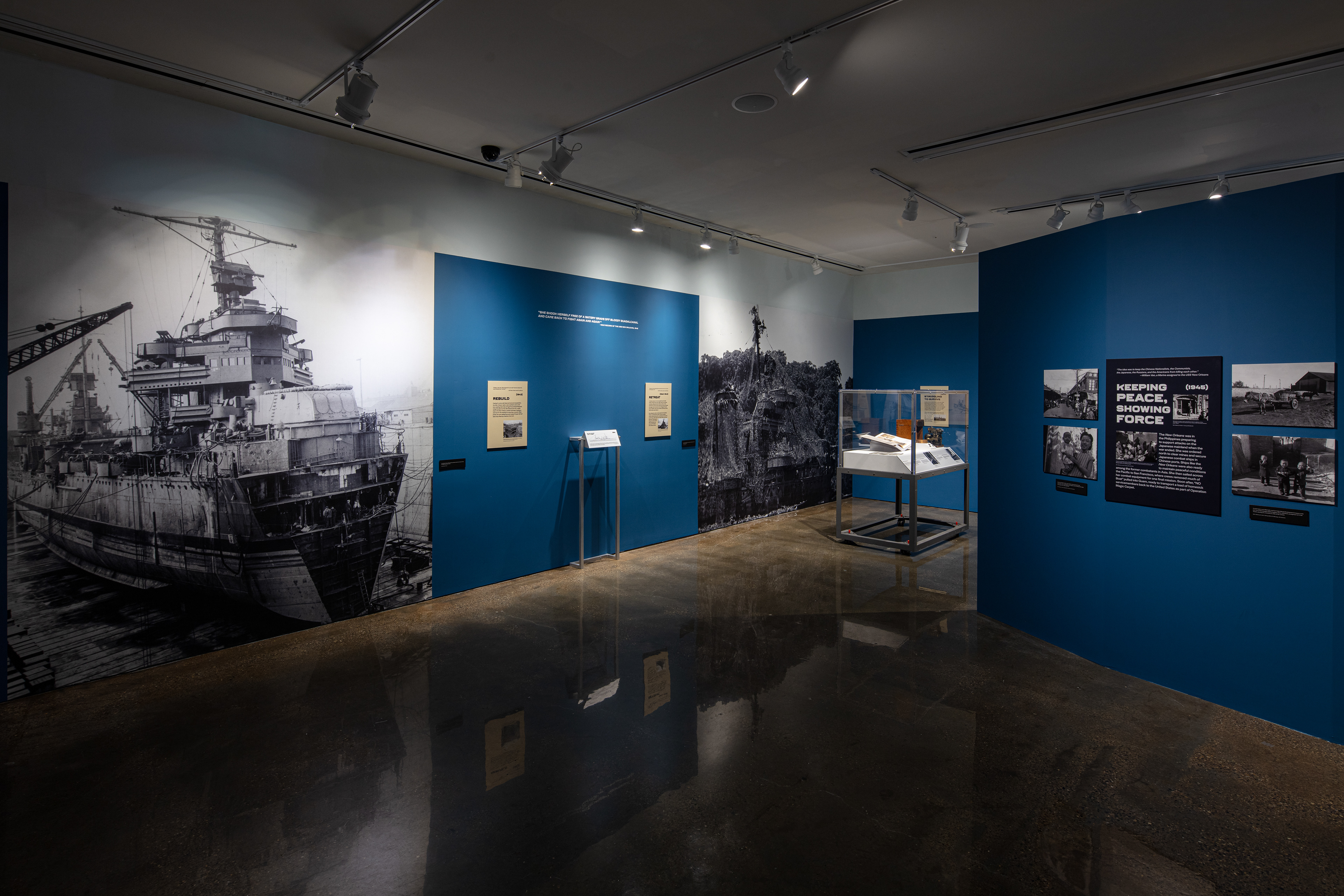
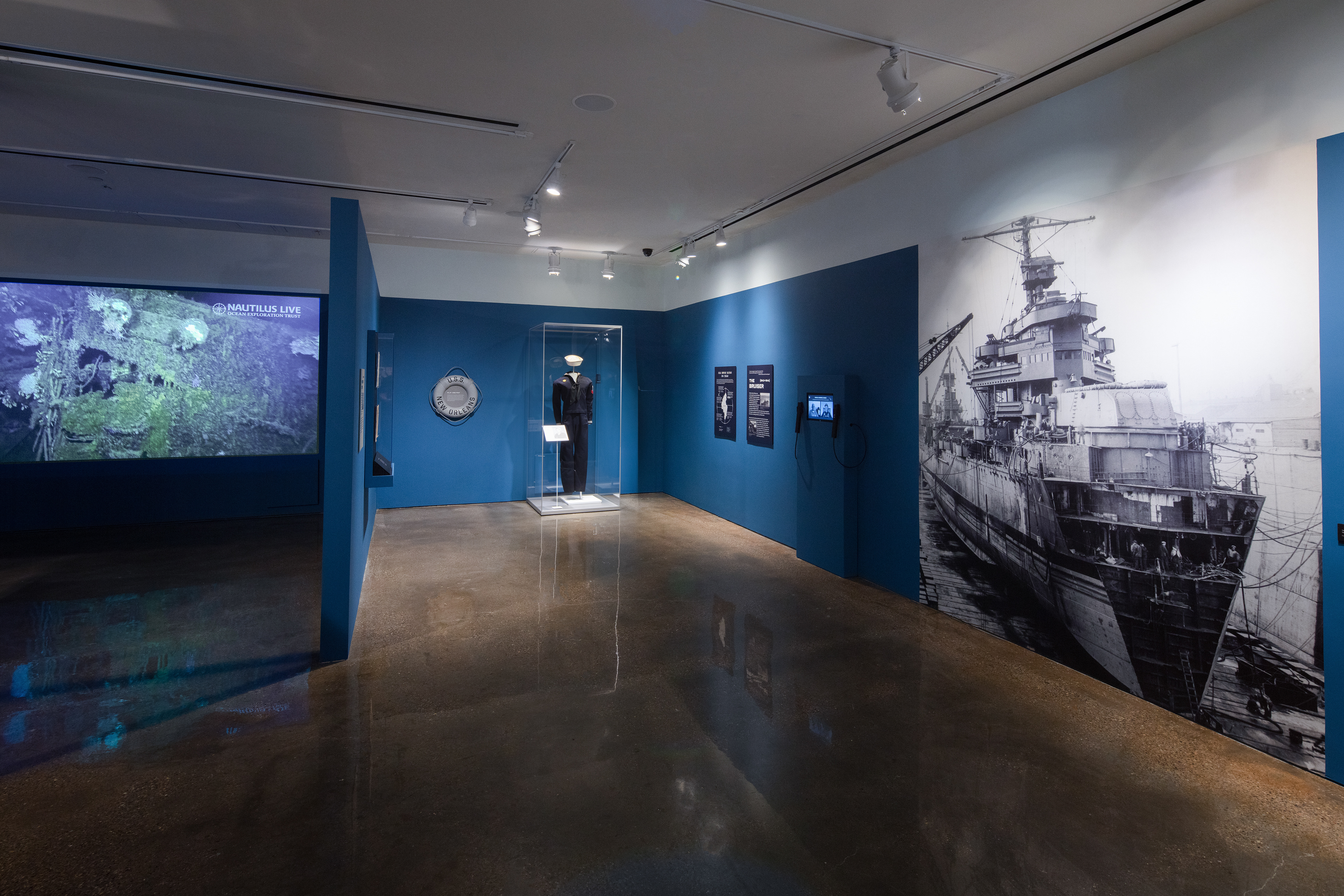
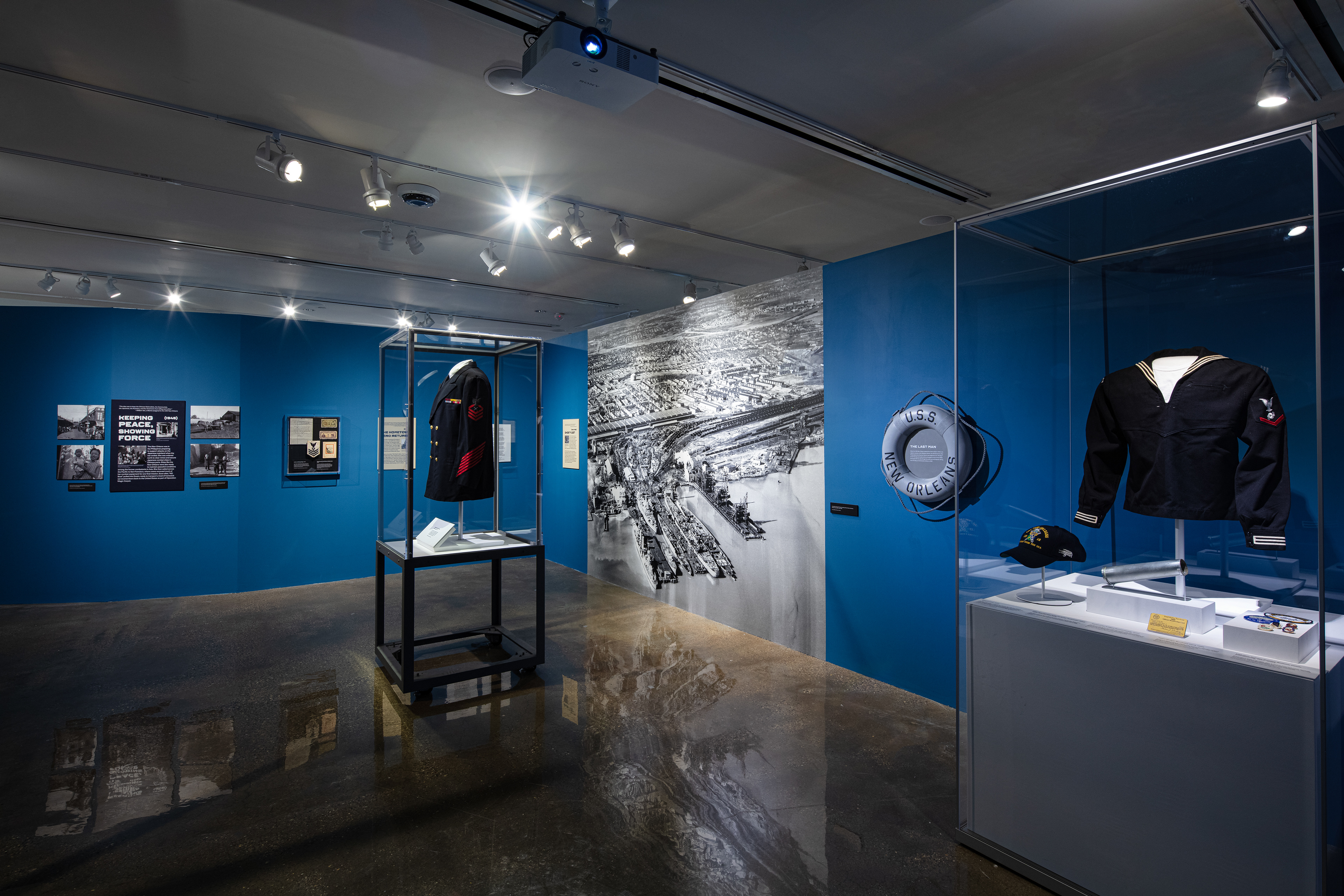
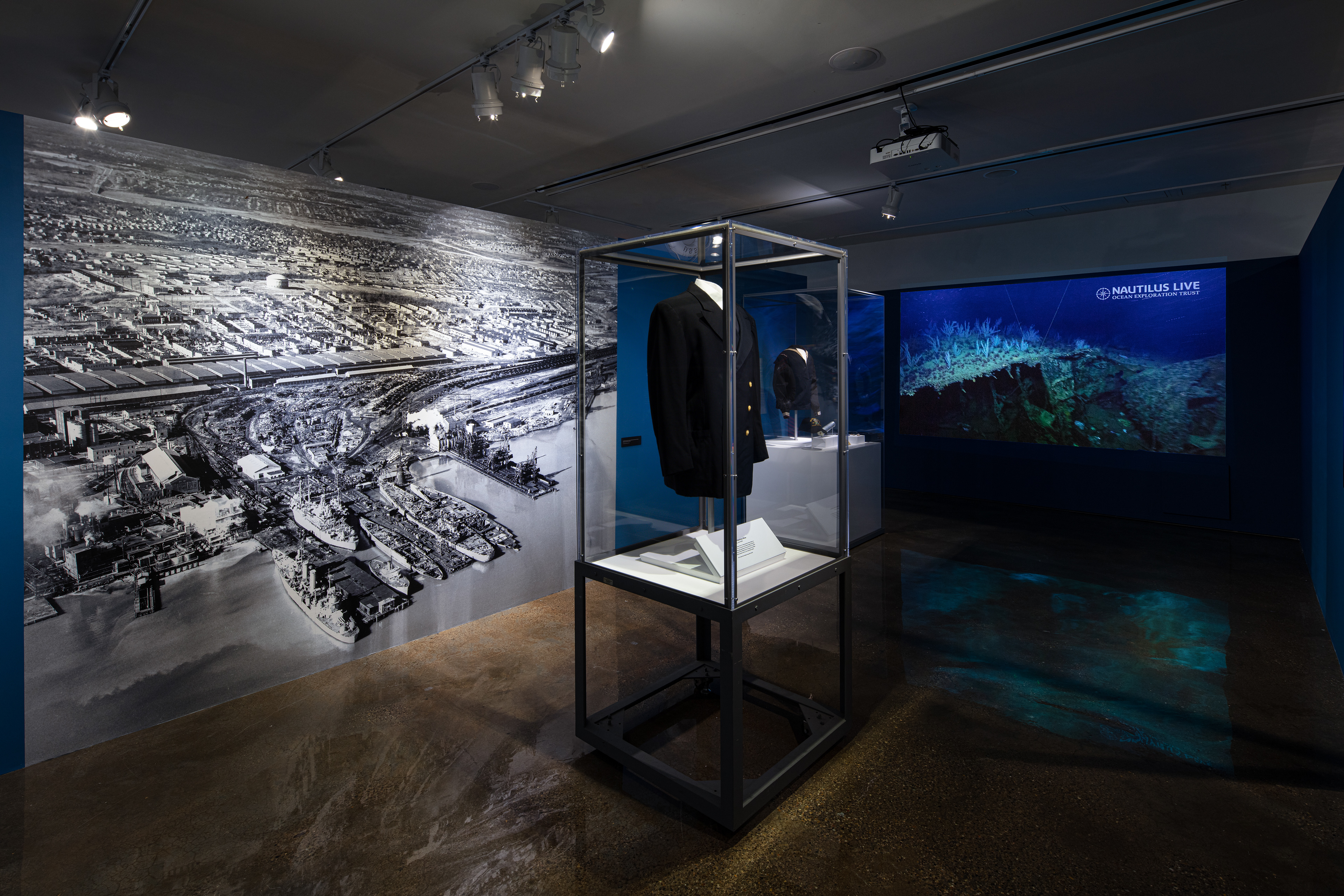
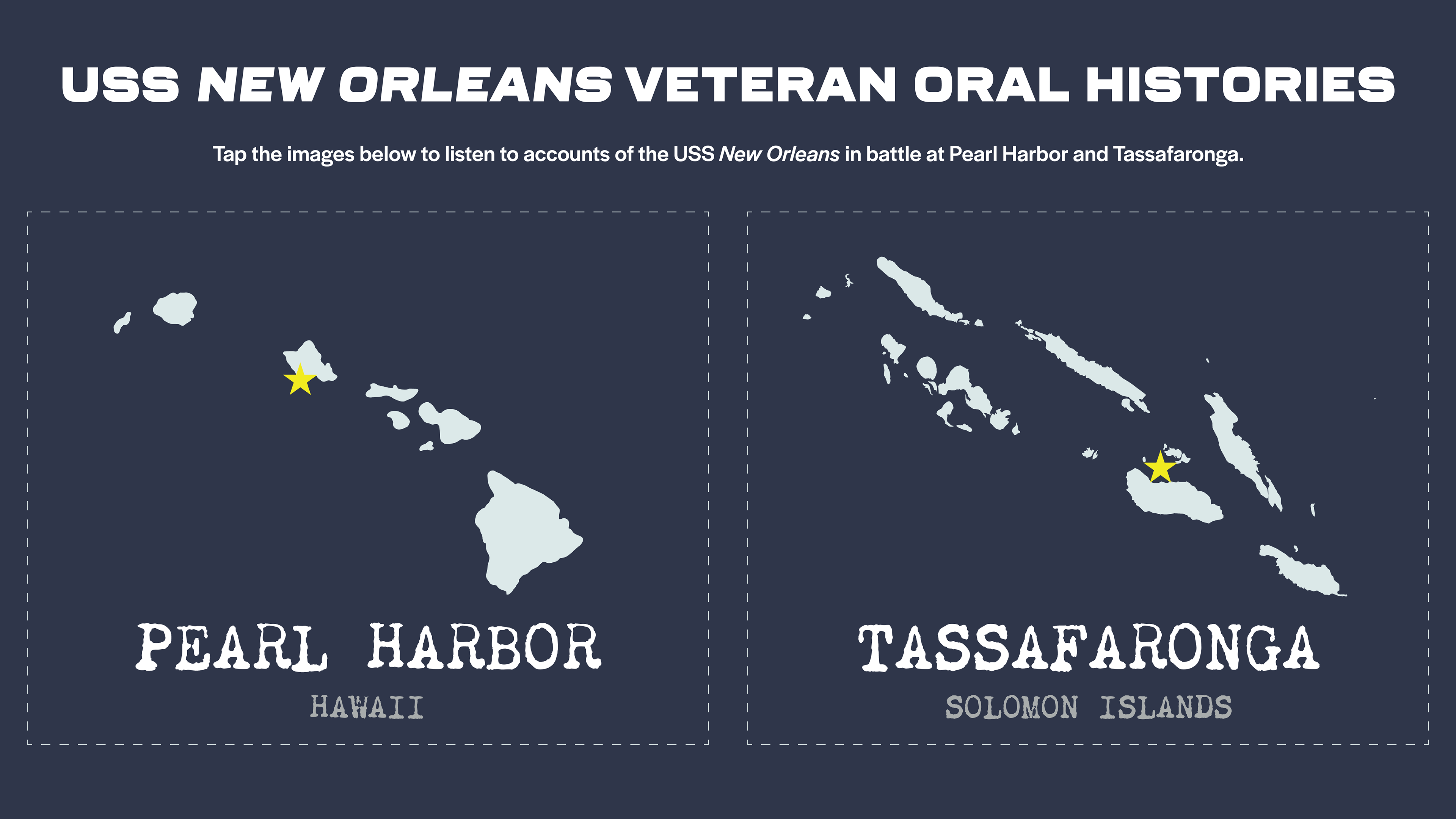
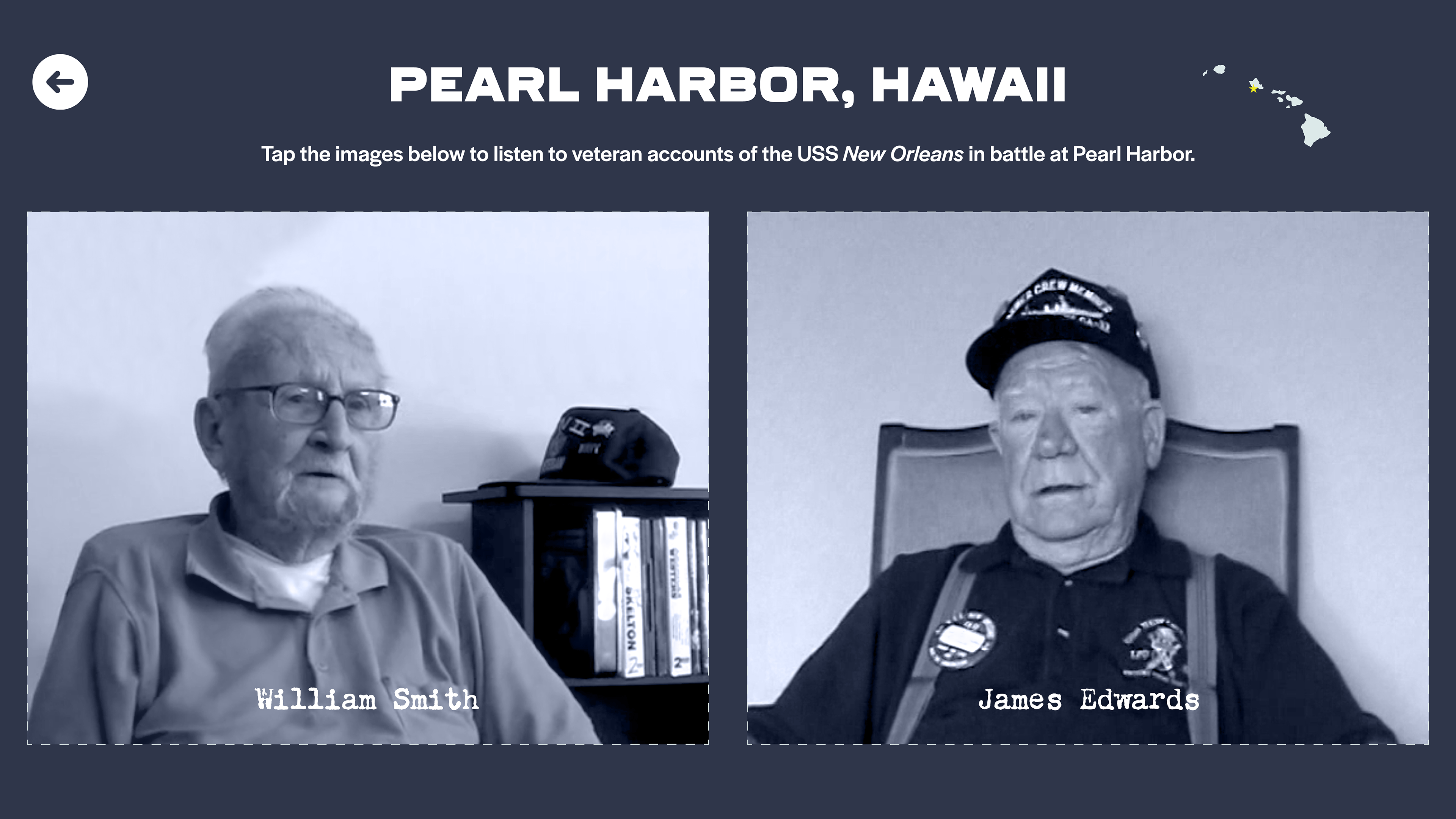
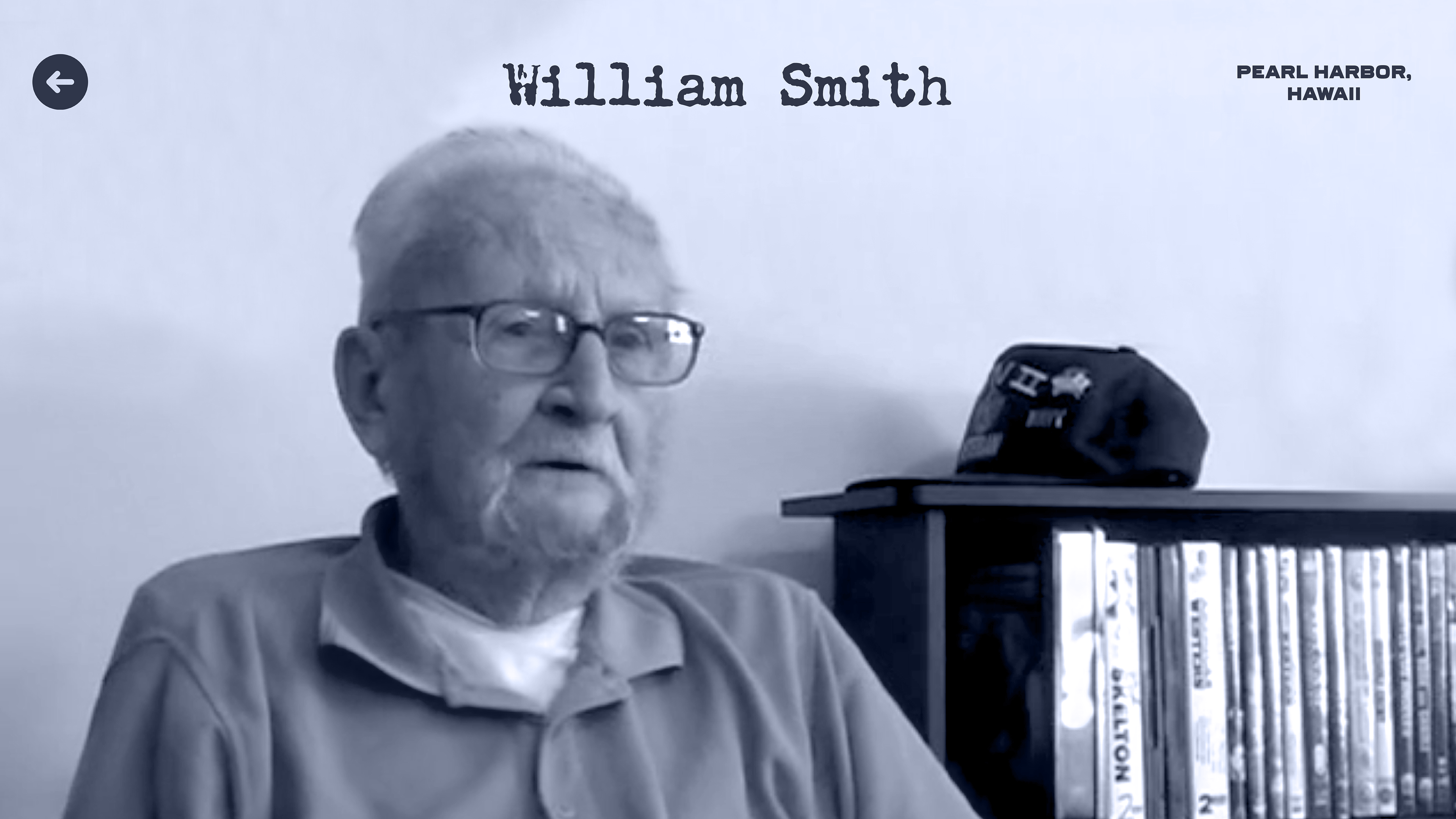
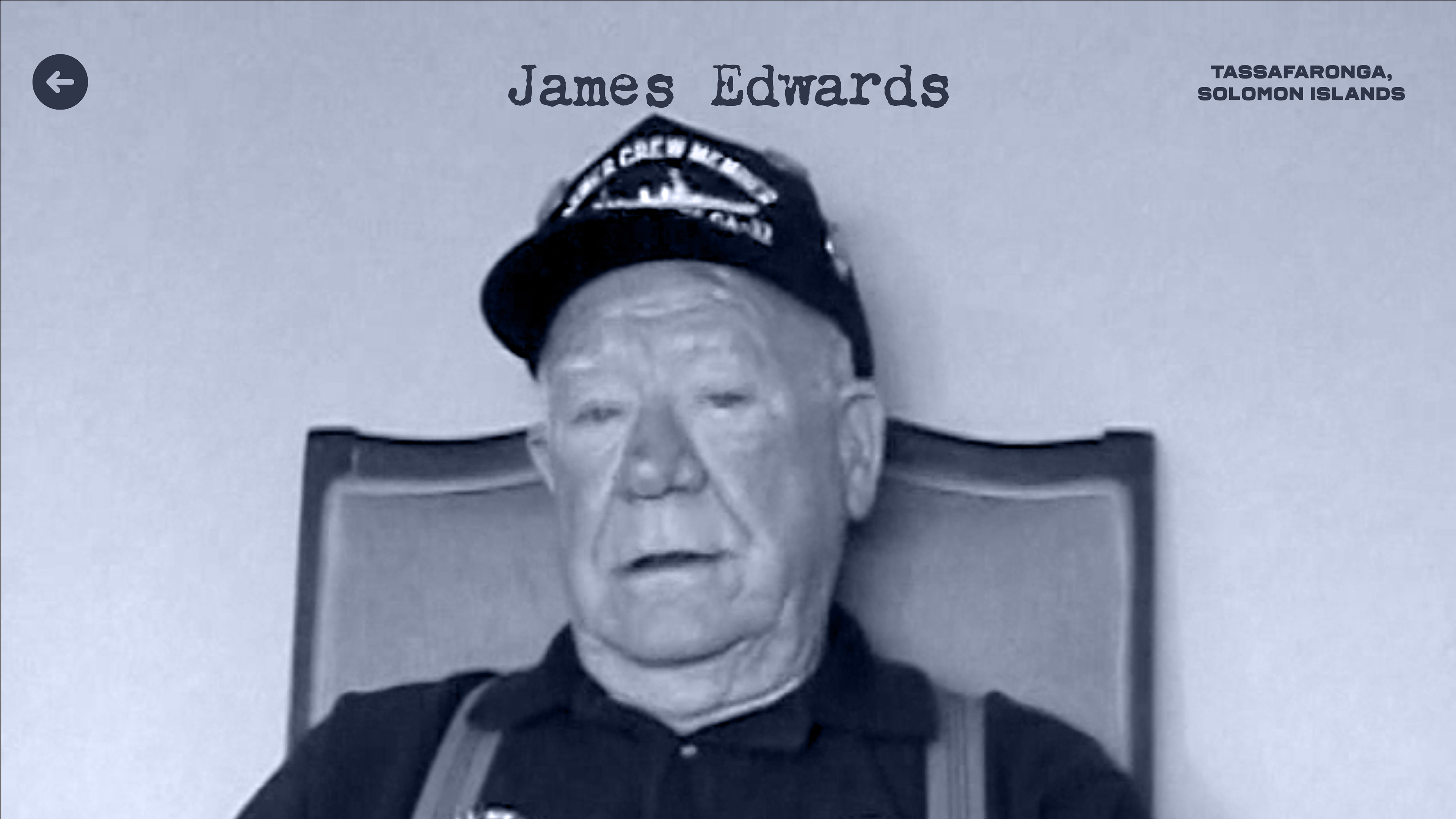
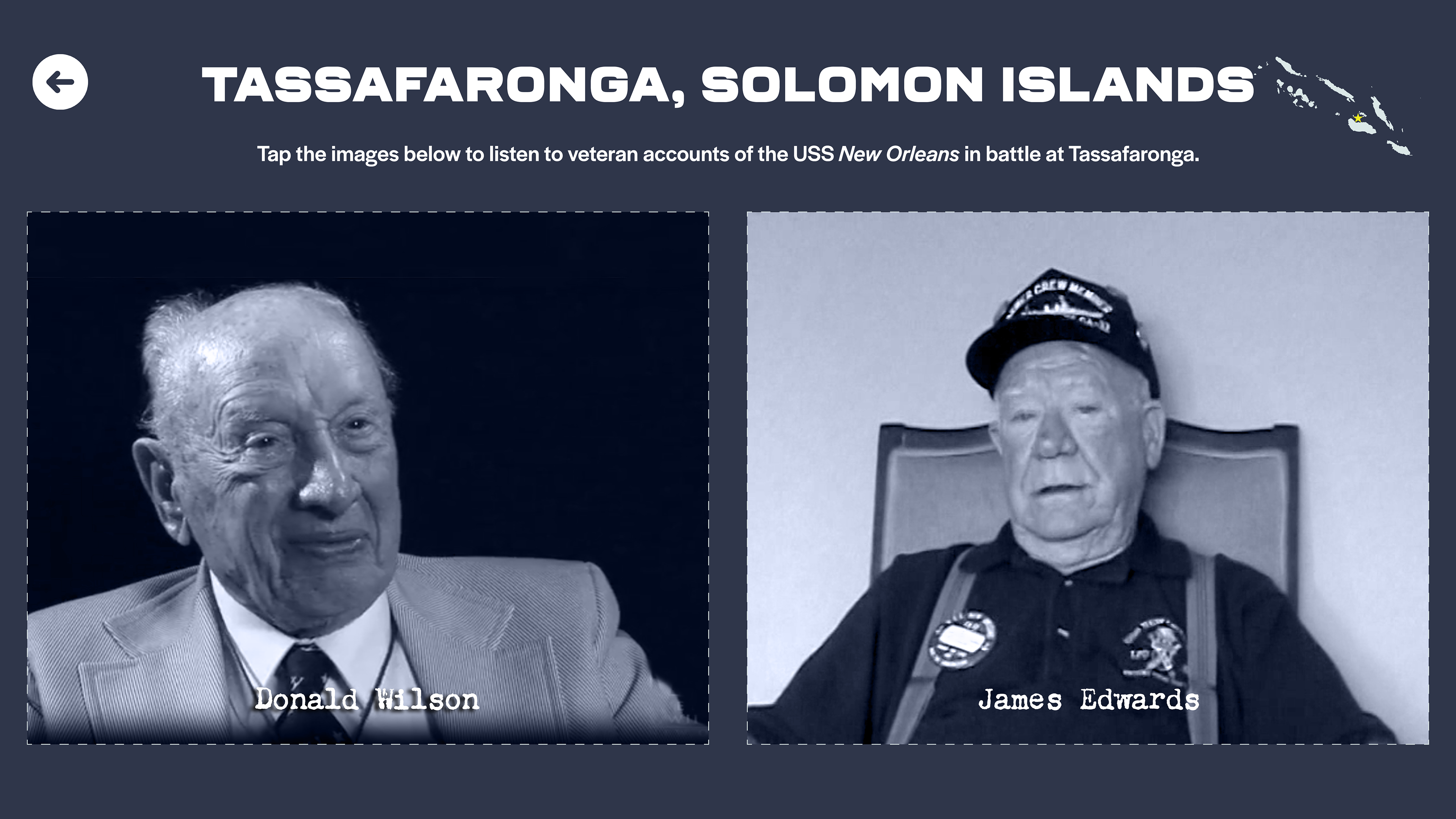
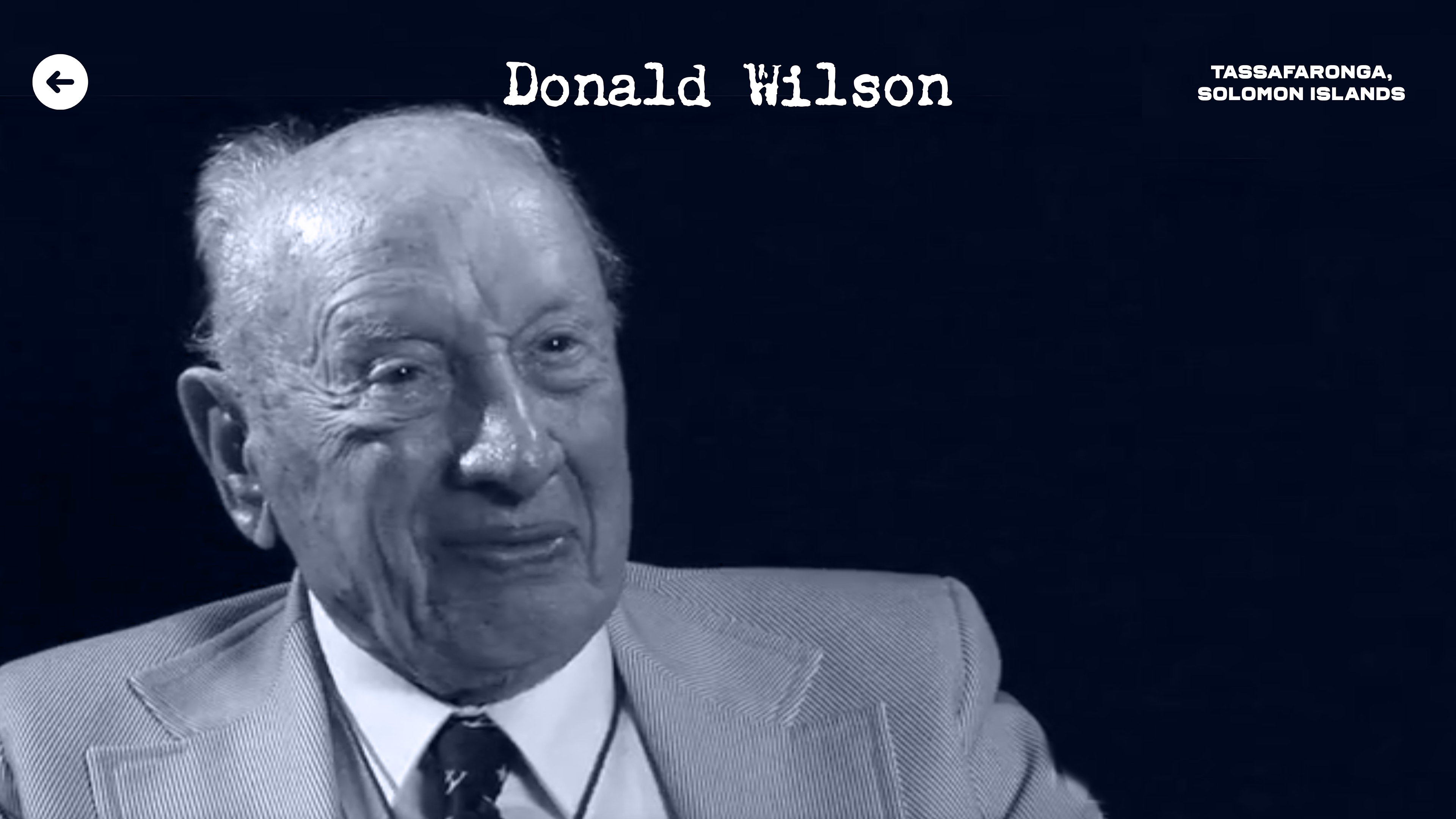
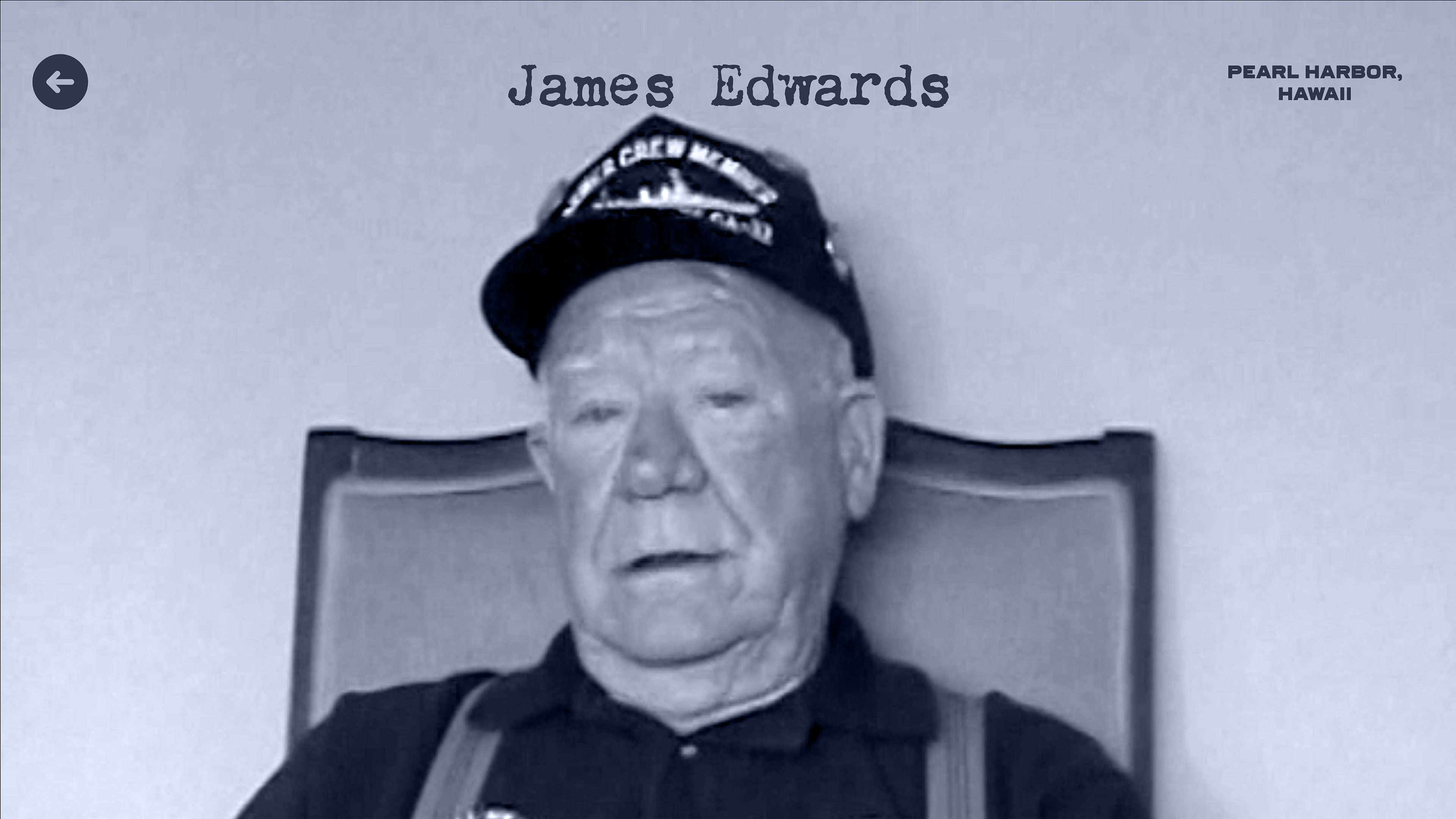
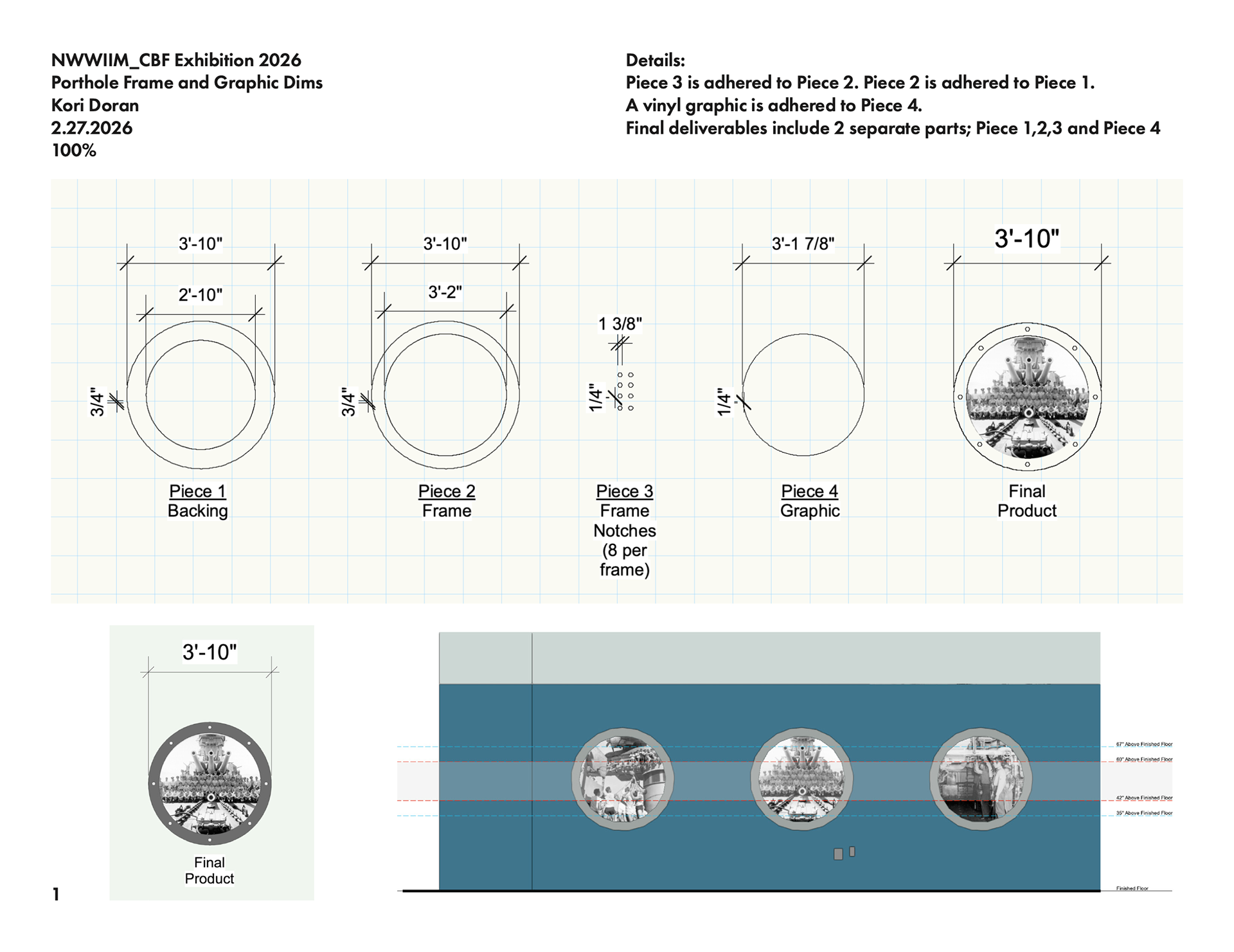
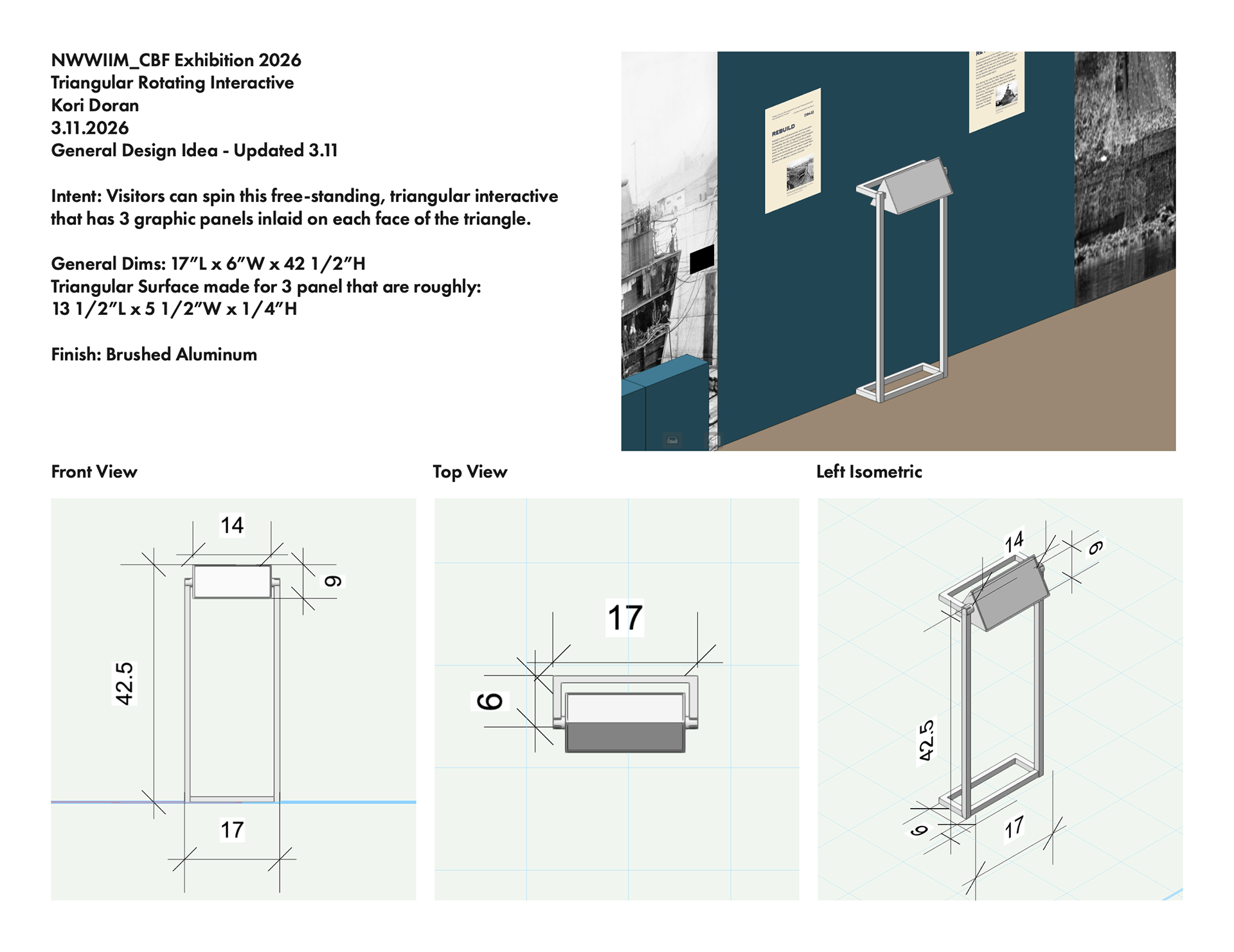
The exhibition design followed the content narrative with supportive elements. As visitors enter, they are greeted by a 1% scale model of the USS New Orleans to show detailed features amidst its mass. The color palette is heavily influenced by the US Navy camouflage palette, while the paint treatment nods to the Pacific Ocean horizon line, of which the sailors were well acquainted. It felt necessary that typography reflect the unique nature of the ship. This led to the use of a wide sans-serif typeface that leaves a footprint as heavy as the cruiser itself. The bold curves and sharp edges mimic the ship's tough exterior and rigid history of repair. A collaboration between Exhibits, Curatorial, Media, and the AV team resulted in two media projections at the beginning and end of the show. The first projection displays a voyage map of the USS New Orleans during the Pacific War and highlights key battle locations. Footage of the relocated bow that had been lost during battle is projected as visitors exit. Portholes at the exhibit entrance helped immerse the visitors in the ship’s environment while providing a snapshot of the sailors' experiences via archival photography. To continue to add to the environmental design, Ring Buoys were hand-painted in the eras style, and functioned as fun-fact panels. The floorplan gently guides the visitors through the extensive narrative, providing stops along the way to view artifacts, an interactive display of the ships reconstruction over time, and an interactive oral history station providing veteran accounts. This exhibition debuted in the Joe W. and Dorothy D. Brown Foundation Special Exhibit Gallery at The National WWII Museum.
VOYAGE MAP MEDIA
INTERACTIVE ORAL HISTORY UX/UI FRAMES
3D FABRICATION PLANS FOR INTERACTIVES – VECTORWORKS
PROCESS